
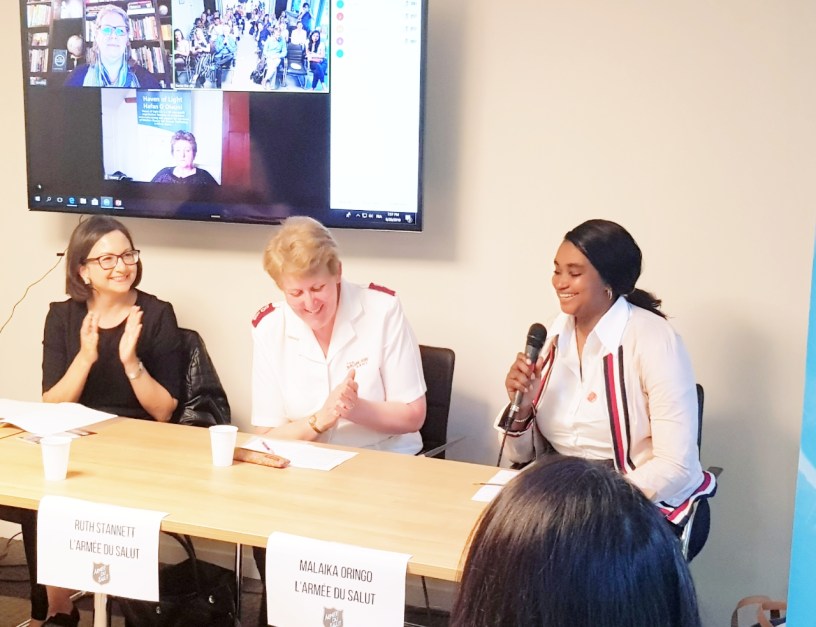
We have a growing local and global team of people who want to develop STC’s role in the fight against human trafficking. Ali Ussery leads the STC International effort. In Brussels, leaders include Lois, Simone, and Marie. The picture above shows a “Zoom-In” forum hosted by STC Brussels in June 2018 to highlight the issue.
Combatting human trafficking has been a Serve the City concern since the very beginning. During our first STC events in Brussels, we cooperated with Oasis International on their “Stop the Traffik” initiative, gathering signatures toward a UN resolution against trafficking and raising awareness of this previously little-recognized problem. However, over the years it has been a struggle to figure out what volunteers are really able to do that makes a difference in fighting this scourge.
In 2018, we turned a corner, as connections and opportunities began to develop and our concern deepened. The Zoom-In event pictured above highlighted this. As Carlton put together the panel, he had the opportunity to include people working at the very highest levels of policy, with the head of anti-trafficking for the EU Commission (the law-making body), the recently-retired UK head of anti-trafficking, and a leading former prosecutor from the US Department of Justice. Also on the panel were people working at city and neighborhood level: a Salvation Army officer and a leader in a Christian group called Cherut (freedom in Hebrew) that works with women in Belgium’s brothel windows. And, most riveting, a woman who had been trafficked from Africa to Europe told some of her story, including the trauma of testifying against her traffickers and a plea to support those going through this experience.
We had hosted Zoom-In events before for our Brussels volunteer community, but we had always been able to contain them in our office. This time, we had more than 75 people sign up, and had to find an alternate venue! Clearly, there is a lot of concern out there about what could be done for this issue.
One of the panelists was a woman called Ali Ussery that Carlton and I know through our Prayer Breakfast connections. Ali works in Wales to uncover trafficking in local communities: people working in slave conditions in car washes, nail salons, and so on. She invited Carlton to come to the UK to meet with leaders on this issue, and they began to discuss how Serve the City could do more to engage with it.
Meanwhile in Brussels, we have some local initiatives. Associations like Cherut and Breaking Chains visit the women in the brothel windows of the Red Light District (where prostitution is legal) and offer them support—and a lifeline they can grab to get out, if they wish. Oasis mobilizes volunteers to visit women working in the Thai “massage parlors,” bringing a newsletter in Thai and trying to develop friendships that could also help them escape. (At various times, STC has directed volunteers toward all of these.)
Lois, in our church (The Well), prays each Monday with Printemps, a Korean missionary living in the Red Light District; they intercede by name for each woman and transgender person in prostitution they have met. And then on Thursdays, Lois and Printemps visit the women who are working the streets in the Yser neighborhood—the still rougher, illegal side of prostitution in Brussels—offering them coffee, candy, prayer and support.
Still, there is far more that could be done, and there are more kinds of trafficking than prostitution: forced begging, unpaid construction, domestic workers, and more. Carlton invited Ali to come to the Serve the City International Forum in Dublin in October 2018 to consider how we could dive deeper. She in turn invited Kevin Hyland, the UK’s first Independent Anti-Slavery Commissioner. He addressed our community about how we could recognize signs of trafficking, alert authorities, and look for evidence of modern slavery in the services and supply chains of companies and local government.
As a result of these discussions, all of the 30 STC cities present renewed their commitment to fight this evil however it exists in their local context, and to mobilize volunteers on this behalf. Ali has been appointed the STC Social Concern Champion for Human Trafficking, to help initiatives go forward across the movement.
 brussels+beyond